
Impact for Funding Bids
How do funders view impact?
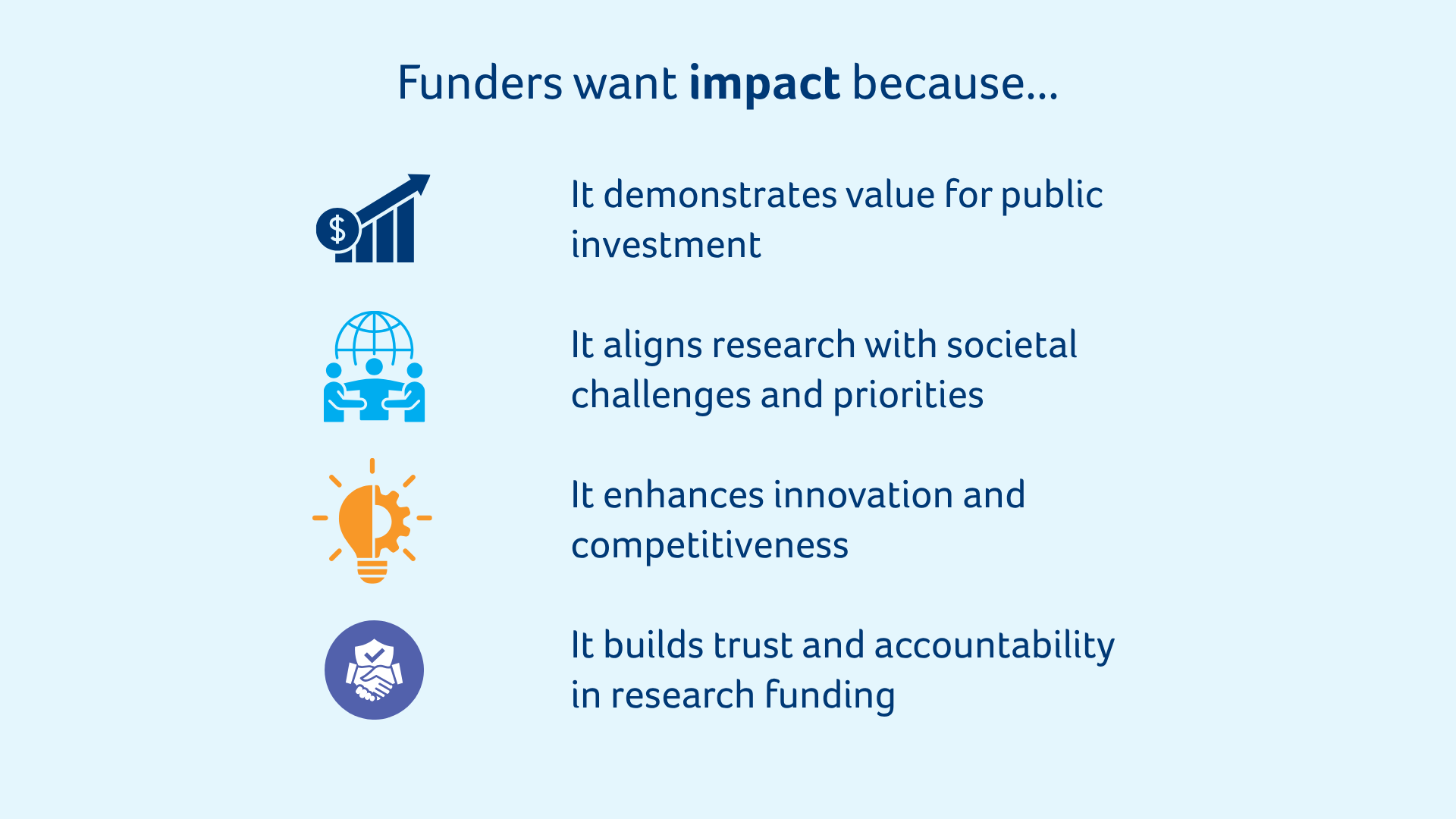
The UKRI definition aligns with the REF definition, which describes impact as ‘an effect on, change or benefit to the economy, society, culture, public policy or services, health, the environment or quality of life, beyond academia.'
Similarly, the European Commission defines impact as ‘the wider societal, economic, and scientific benefits of research beyond academia.'
Impact can be generated from all types of research funding:
- Foundational/ Blue sky: Knowledge creation, theory development
- Applied Research: Solutions for real-world problems
- Industry Collaborations: Technology transfer, commercialisation, integration of research into practice
- Networking & partnerships: Strengthening research ecosystems and broadening stakeholder pools
- Conferences & dissemination: sharing research and findings to a broader range of beneficiaries
- Proof of Concept/ Pilot Studies/ Pump Priming: Testing feasibility of interventions, understanding service user experiences, linking stakeholder experiences to potential results
Justifying impact through reach and significance.
-
Reach: How broadly the impact extends beyond academia
-
Significance: The importance and transformative potential of the impact
For example:Saving a life is profoundly significant at a small scale. Slightly enriching a million lives has substantial reach but less significance. Ideally, reach and significance will be considered relative to the academic disciplines and the scope of the research. You can and should have a balance of both.

Impact as part of the proposal design:
-
Impact should be integrated into the research plan
-
Where possible, impact activities should be planned across the project
-
Refer to specific activities relating to impact in your research plan
-
Other proposal sections should relate to and link to your impact plan: e.g. Partners, budget, engagement and dissemination plans

Where do you write about impact?
- Sometimes - Dedicated impact sections or questions
- Most often - As part of a larger section
For example:UKRI - Vision, Approach, and Resource JustificationNIHR - Research Plan and Budget JustificationNuffield Foundation - Case for funding, Methods, Approach & Activities and Outcomes, Output & Dissemination

Ways to develop your impact section
Writing a strong impact section
Structuring an impact section
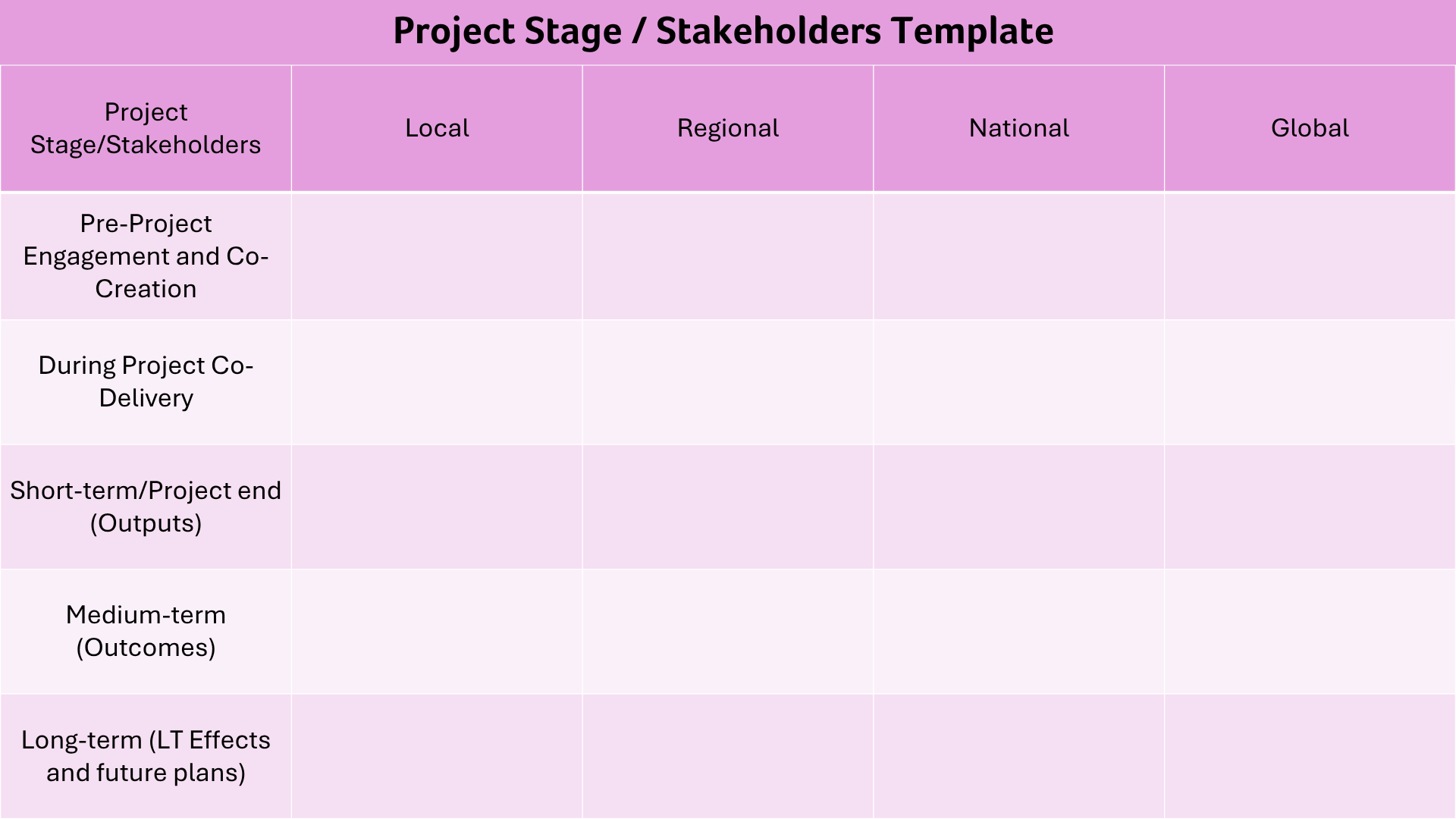
Project Stage / Stakeholders Template and Example
Click here to download the blank template to plot your writing and planning impact.
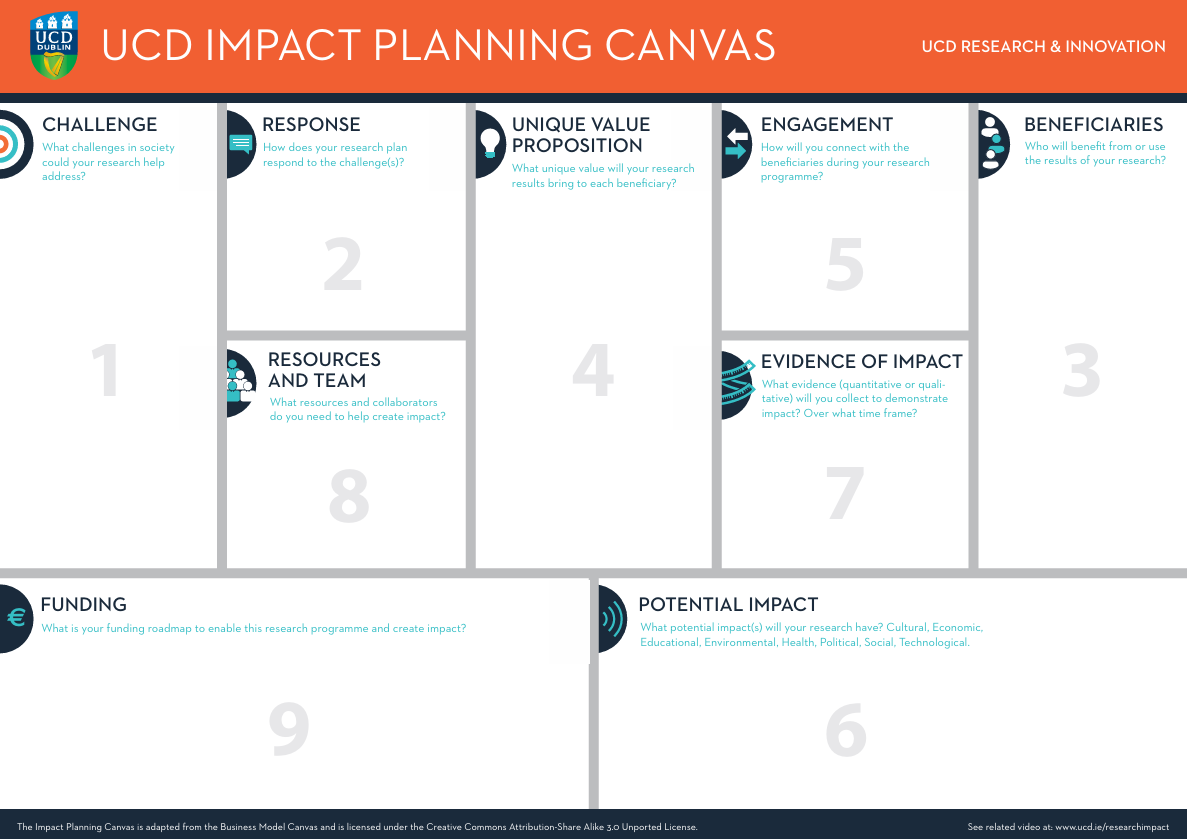
The UCD Impact Planning Canvas is available to support you as you begin shaping the wider significance of your work and it’s a great place to get creative with your thinking.
- What real-world challenges is your work responding to? From societal issues to sector-specific problems, this is your chance to connect your research to the world beyond academia.
- Who stands to benefit from your work? Consider the communities, organisations, industries or groups who could feel the positive effects of your research.
- How will you show that your work is making a difference? Think about the types of evidence you could gather to demonstrate impact. For example: stories, data, engagement, change in practice or policy influence.
Visit the UCD Impact Planning Canvas webpage to find out more information, find completed examples, and download a copy.
Resources and Guidance

Resources
Discover resources available for you to use.
Funder Guidance
Find out more about funder guidance.